





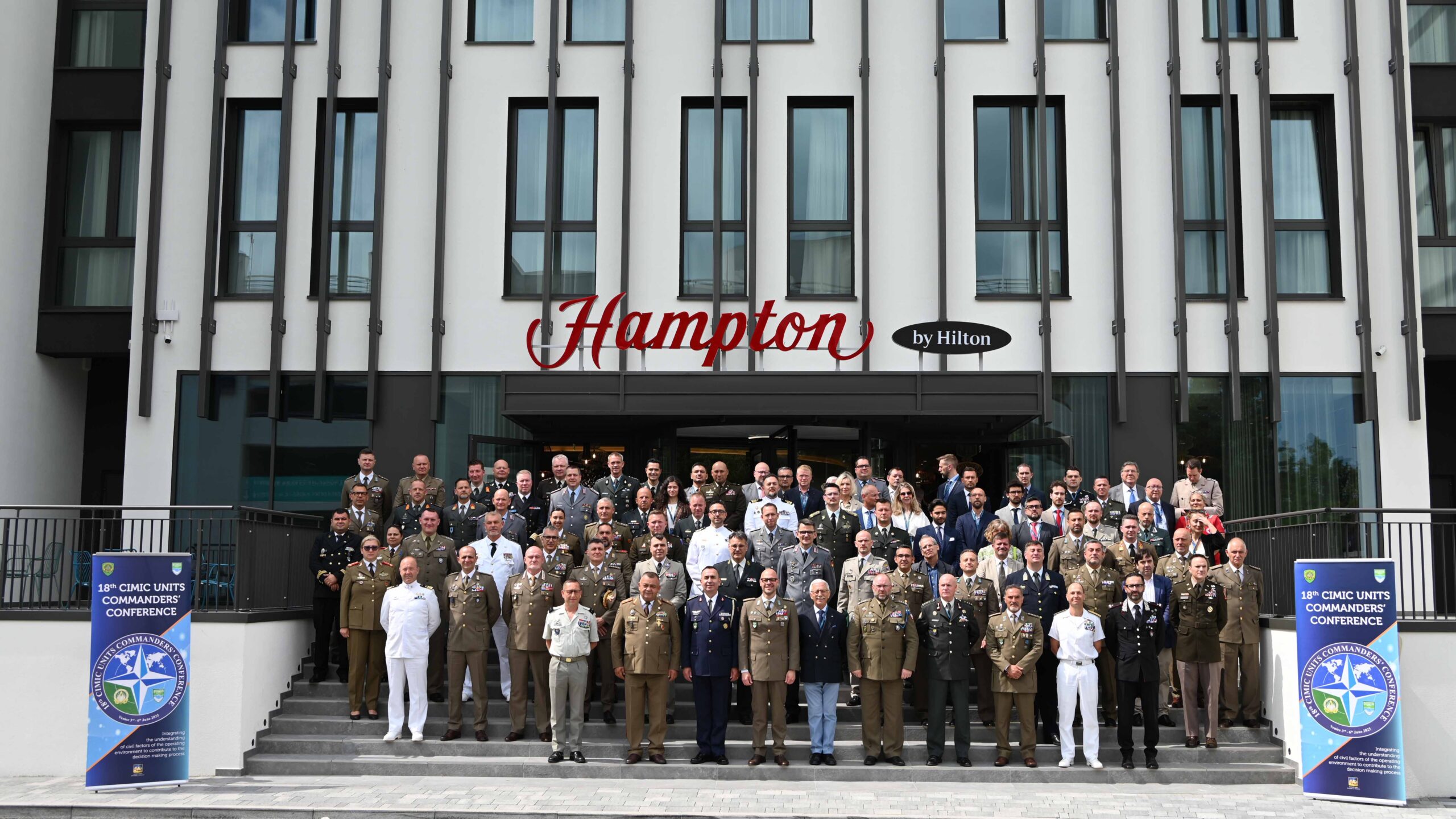
After eighteen editions, the CIMIC Units Commanders’ Conference no longer needs to prove that it has a place within the international CIMIC community. Its continuity, the quality of the themes it has addressed and the participation it has attracted over time have already established that. The more relevant question today is different: why does the conference still matter?
The answer lies in the nature of the conference itself. The CUCC has remained relevant because it has never reduced itself to a formal gathering or a routine annual event. Its function has always been practical and professional: to provide tactical-level CIMIC commanders, practitioners and stakeholders with a serious forum in which to exchange perspectives, compare experience and reflect on the issues that increasingly shape operational effectiveness.
This role has become even more important over time. The operational environment is now more compressed, more interconnected and more demanding than in the early years of the conference. Decisions are taken under accelerated timelines, amid information overload and strategic competition, with a growing need to understand the civil dimension with greater depth and precision. In such a context, dialogue across the international CIMIC community is not a luxury. It is part of professional readiness. The strength of the CUCC has been its ability to keep that dialogue anchored insubstance.
Across the years, its themes have shown a clear trajectory: from mission-derived lessons and post operational reflection, to training and force preparation, to resilience, human security, Allied territory and the understanding of civil factors as part of operational analysis and decision-making. This continuity shows that the conference has remained relevant not by standing still, but by evolving without losing its purpose. That is also why the CUCC continues to generate interest. It offers more than visibility. It offers perspective. It allows participants to recognise how tactical CIMIC is changing, which demands are becoming more pressing and which lines of thought deserve attention before they become unavoidable.
This is the foundation on which each new edition is built: not formality, and not habit, but a recognised need for informed discussion within a multinational setting. The next step in that journey is therefore not simply another edition. It is part of a broader continuity in which the CUCC keeps serving the same essential function: offering the CIMIC community a serious and credible space in which to think ahead.
MNCG is leading the way on civil-military cooperation.