





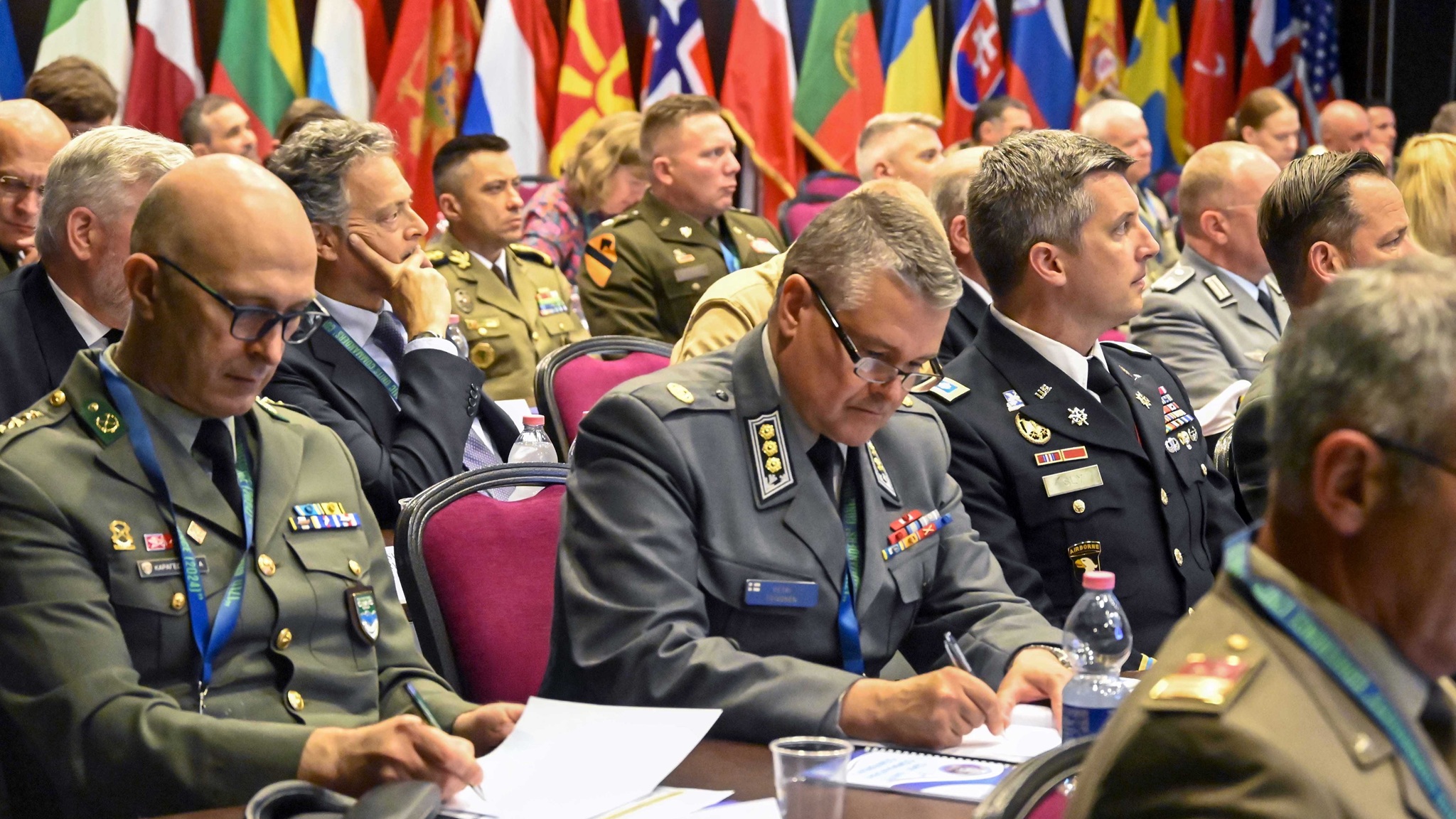
Looking back at the history of the CIMIC Units Commanders’ Conference means looking at more than the growth of a successful event. It means observing, through its themes, how tactical CIMIC has evolved and how the international community has progressively adapted its thinking to new operational demands. This is one of the reasons why the CUCC has maintained its relevance over time. It has never been limited to offering a venue for discussion. It has consistently provided a professional setting in which questions affecting tactical CIMIC could be examined before they became self-evident.
In that setting, emerging issues could be tested against operational experience, doctrinal reflection and multinational dialogue. In its earlier editions, the conference addressed matters closely linked to ongoing missions and to the practical lessons derived from complex environments. The retrospective analysis of Provincial Reconstruction Team activities in Afghanistan and of the 2014 Afghan elections reflected a period in which the CIMIC community was still drawing lessons from demanding mission contexts and from the interaction between military structures, civilian actors and local governance dynamics.
As the context evolved, so did the conference. Attention moved toward national CIMIC training and qualifications, the NATO Response Force, and the relationship between CIMIC and influence-related activities at tactical level. This widening of perspective showed that tactical CIMIC could no longer be discussed only in relation to stabilisation efforts. It had to be understood as a capability with relevance across a broader range of military activities and operational requirements.
A further step came with the growing attention to Article 5 operations, remote support, cross-cutting topics and resilience. Later editions explored effective leadership, trust-building between different actors, human security in operations, NATO CIMIC activities in Allied territory and, more recently, the integration of civil factors of the operating environment into the decision-making process. Seen together, these themes reveal a clear continuity of purpose combined with a steady evolution of focus.They show that the CUCC has never treated tactical CIMIC as a fixed body of assumptions, but as a fieldt hat must refine its methods, vocabulary and contribution in light of the changing operational environment.
This is where the conference has shown particular value. It has not simply followed doctrinal and operational developments from a distance. Long before some topics became central to wider defence discussions, the CUCC had already opened space for serious dialogue on resilience, leadership, human security, Allied territory and the operational relevance of civil factors. For this reason, the conference should not be seen as a recurring appointment of symbolic value alone. Its importance lies in the consistency with which it has connected tactical practice, multinational exchange and forward-looking discussion, accompanying the evolution of a capability and helping prepare it for the demands of the future.
MNCG is leading the way on civil-military cooperation.